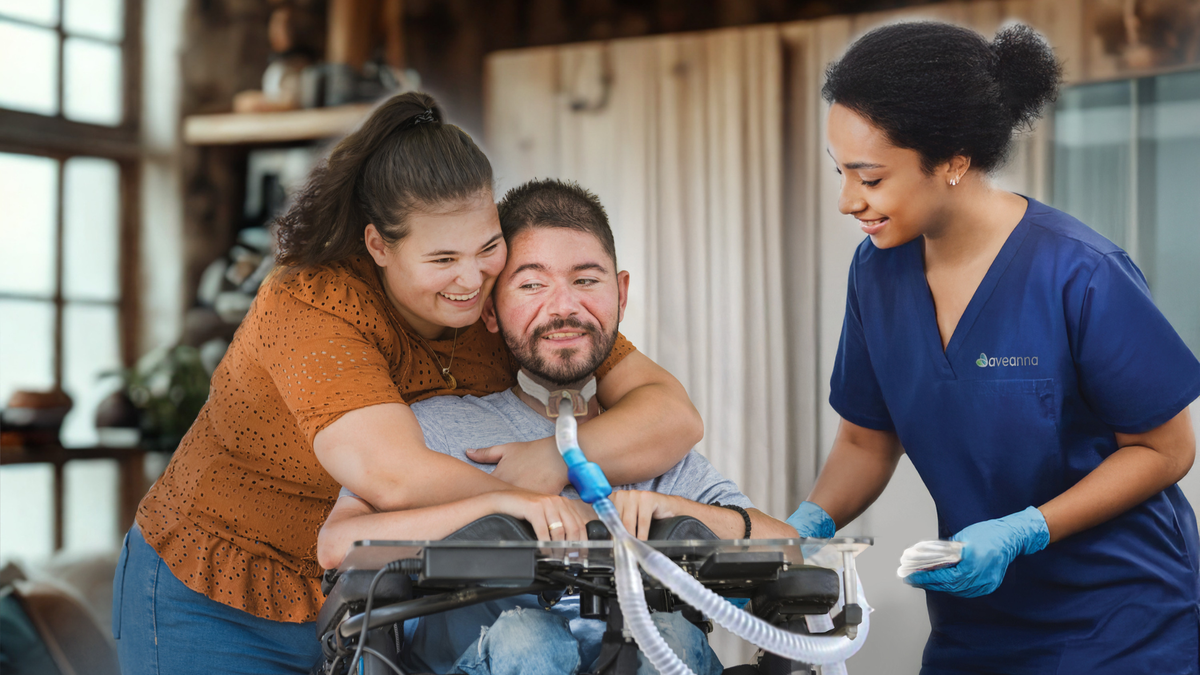
 Amyotrophic lateral sclerosis (ALS) is a progressive neurological disease that affects the nerve cells responsible for controlling voluntary muscles. As ALS advances, individuals may experience significant muscle weakness, difficulty speaking and swallowing, progressive paralysis, and serious respiratory challenges. While there is currently no cure for ALS, hospice care can provide meaningful support focused on comfort, dignity, and quality of life.
At Aveanna Hospice, we specialize in caring for individuals with advanced ALS, offering compassionate, personalized care that supports both patients and their families during this challenging time.
Understanding ALS and When Hospice Care Can Help
ALS progresses differently for each person, but advanced ALS often includes increasing dependence on others for daily activities and support with breathing, eating, and communication. Hospice care is typically appropriate when ALS reaches an advanced or end stage and care goals shift from curative treatment to comfort-focused support.
Hospice care for ALS is designed to manage pain and complex symptoms, support breathing control and respiratory needs, ease emotional stress and anxiety, and provide guidance with goals of care and end-of-life planning.
How Aveanna Hospice Supports Patients with ALS
Skilled Nursing Care
Registered nurses visit regularly to monitor the patient's condition and manage symptoms related to ALS progression. Care may include monitoring respiratory status, administering medications such as pain relief or muscle relaxants, and providing guidance on skin care, feeding, and hydration, with additional support from hospice aides and caregivers for daily needs.
Personal Care Assistance
Hospice caregivers assist with bathing, dressing, grooming, mobility, positioning for comfort, and feeding support when swallowing becomes difficult.
Medical Equipment and Supplies
Necessary medical equipment and supplies such as feeding tubes, suction machines, mobility aids, oxygen, and respiratory support equipment are delivered, set up, and maintained by the hospice team.
Counseling and Emotional Support
Hospice social workers provide counseling, coping strategies, advance care planning guidance, and support for both patients and their loved ones.
Spiritual Care
Chaplains or spiritual counselors offer care tailored to each individual's beliefs, including prayer, spiritual rituals, or a compassionate presence.
Bereavement Support
After a loved one's passing, families receive bereavement support for up to 13 months through counseling, educational resources, and ongoing outreach.
Learn more about Aveanna Hospice services today.